Technique & Approach #10

Pushing film.

Recently I traveled to Europe (you may have heard) and there were a few situations where I pushed my film. By that I mean, instead of setting my camera to the speed (or ISO / ASA setting) of for example 800, I pushed it to 1600. Let me explain, ISO or film speed is the level of sensitivity or rating a film has. Works in a similar fashion to digital, except it's electronic with digital and chemical with film.

Cinestill 800t, is a perfect match for night time photography with lots of artificial, tungsten or fluorescent lighting. 800t is actually white balanced to tungsten light, whereas most other films are balanced to sun light.

Pushing the film from 800 to 1600 allowed me to shoot at a higher shutter speed, minimising (not completely) camera shake and producing blurry photos. The processing time of the film has to be adjusted to suit how many stops the film has been pushed. For example 100 speed film might get pushed from 100 to 800, which is 3 stops of exposure. 100, then 200 (1st), 400 (2nd) and then finally 800 being the 3rd stop. A stop is essentially an adjustment of exposure. Again, working in a similar fashion to digital.

*Please note that learning about the basics of ISO, shutter speed, aperture would give you a better understanding of the different stop instances.
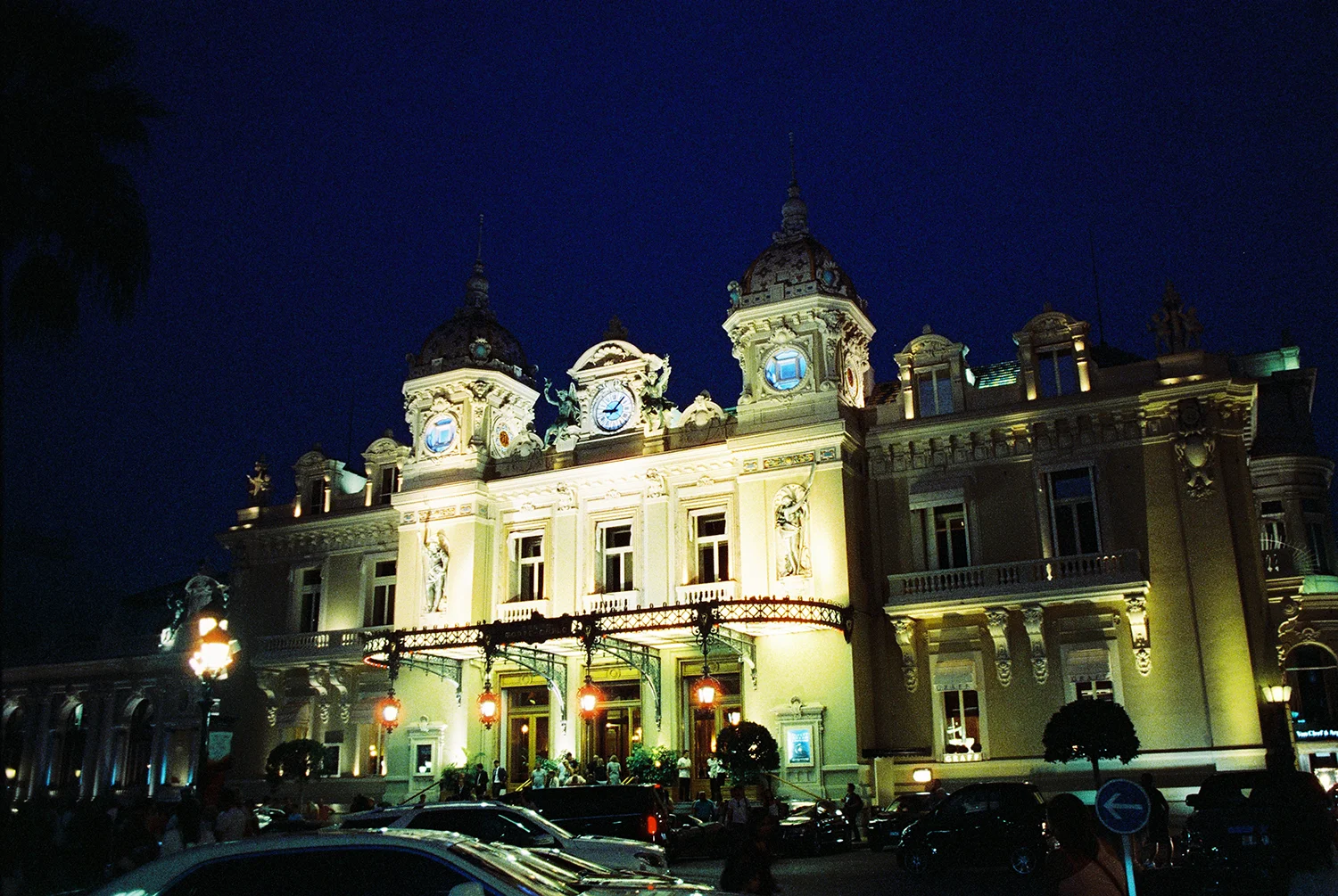
Casino De Monte Carlo, Cinestill 800t, Canon A1. Aug 2015

Casino De Monte Carlo, Cinestill 800t, Canon A1. Aug 2015

European Postcards. A journey of discovering new things.

Having recently returned from an amazing journey throughout Europe (a good chunk of it at least), I will soon be having an public solo exhibition. On display will be a number of photographs 'postcards' printed in A3 and also in postcard size, available for purchase from my travels. I have released a small amount of photos on my Instagram account, but will certainly be keeping the best to last...

With a strong emphasis on historical places, architecture and few off-the-track spots, where I would wander off in search of something a bit different, tourists, with street documentary / cinematic approach. Armed with 2x Canon A1s (circa late 70s) and having shot 20 rolls of film, I promise you something quite special. 

Brisbane, 1st quarter 2016. The final details of the exhibition (date + time) TBC.

Paris, Musée d'Orsay.

Paris, Musée d'Orsay.

This is only the beginning, as I hope to venture on another trip in the not-to distant future. To where yet, I am undecided. I do however have a strong interest in Scandinavian history, so perhaps Sweden, Denmark, Norway and Russia might be on the list. Scandinavian / Russian architecture, every day life, majestic scenery and of course Nordkapp (northern cap) - the most northern tip of the world. Also recent history of the Balkan region as well. Documenting the recovery after years of conflict. 

For me travel is about the experiencing of the unseen, the undiscovered, cultures, history, new places, new delicacies and of course the people who you meet and may spend time with along the way. Fascinated by these new places and adventures, I look forward to capturing and sharing with in the future. 

Technique & Approach #9

For me I find, since I switched to film I've become much more patient with my picture taking. Be it in part due to the overall cost of film + developing and scanning or a greater appreciation for each moment taken. 

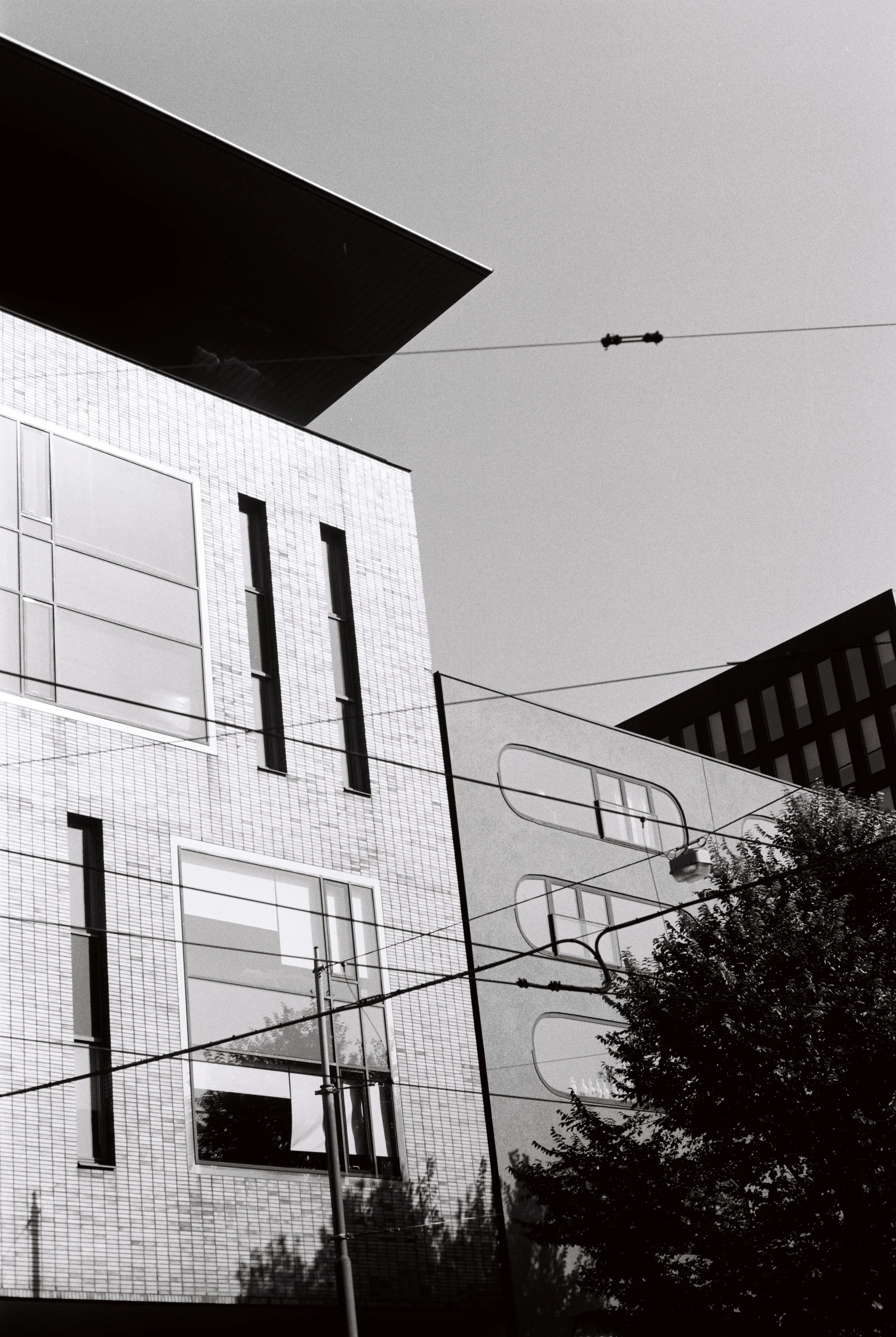
The process of selecting a camera, lens, film, time of day / night (not always possible when traveling with a restricted time frame). This case, was just a 28mm lens, a roll of bw. 

The image, happened to be the right time of day, with the sun in the perfect position, providing the best light reflecting off of the buildings surface. A sort of glow I suppose. The perfect blend of white to black with all the grey in between. My obsession with light, architecture evidently clear. Modern Dutch Architecture.